Training school 1
Training school 1
A strong start
The FRESCO4NoPain training school, hosted by CNAP as part of the Marie Skłodowska-Curie Actions Doctoral Network, opened with an introduction to the project network, work packages, and doctoral candidate projects.
Insightful talks
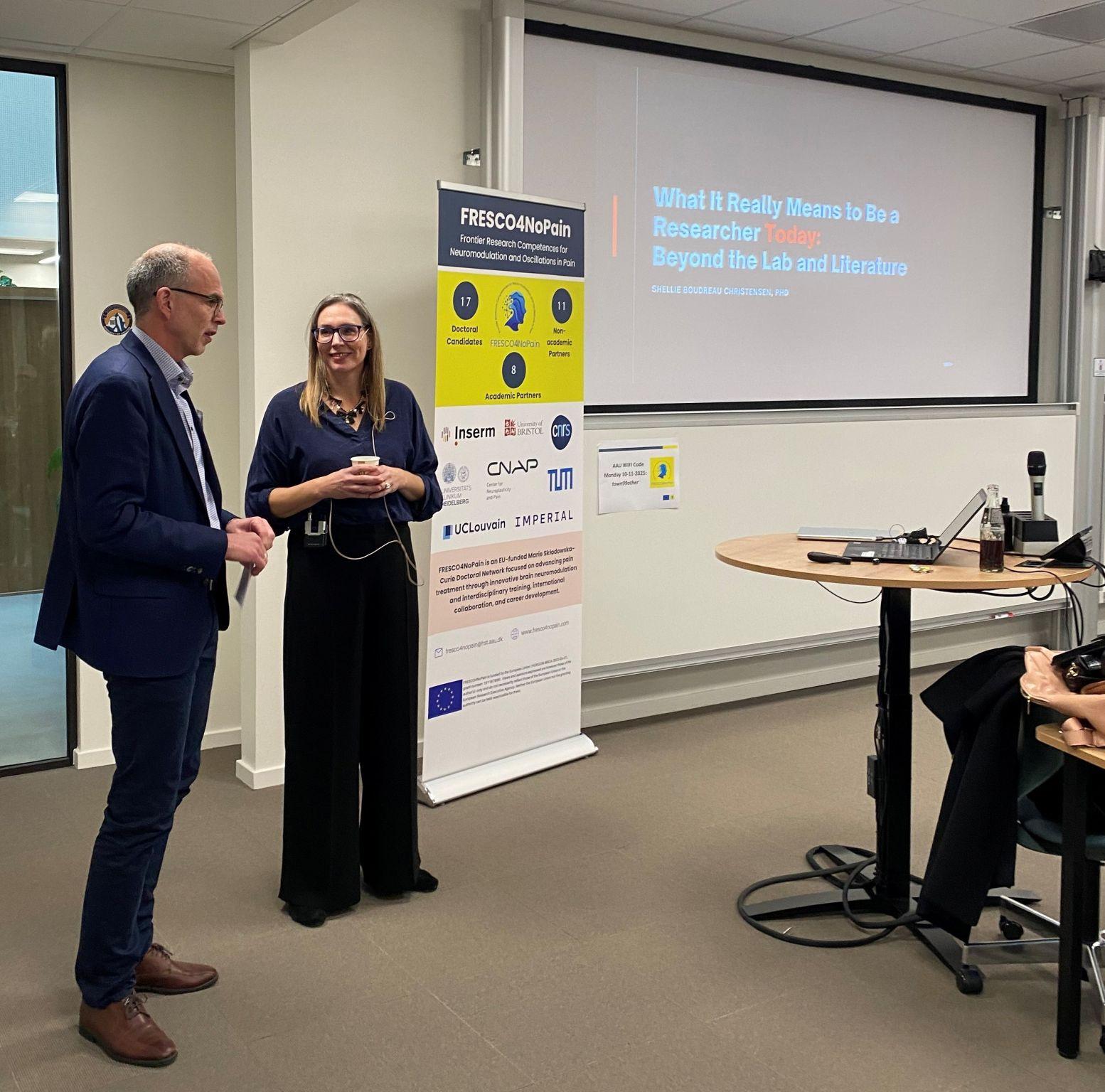
The training offered participants a comprehensive introduction to the scientific foundations of pain research, combining insights into biological mechanisms, experimental methods, and modern neurotechnologies.
Through a series of focused lectures, attendees explored how pain is generated and modulated in the nervous system, gaining a clearer understanding of the pathways and models used to study complex pain processes.
A key moment of the event was Paolo Belardinelli’s keynote lecture, “Real-Time, Brain-State Dependent EEG-TMS: Achievements, Perspectives and Open Challenges,” which demonstrated how combining EEG with TMS is opening new possibilities in neurostimulation research.
Together, the scientific sessions offered a broad and integrated overview of the approaches driving innovation in contemporary pain science.
Hands on lab visits
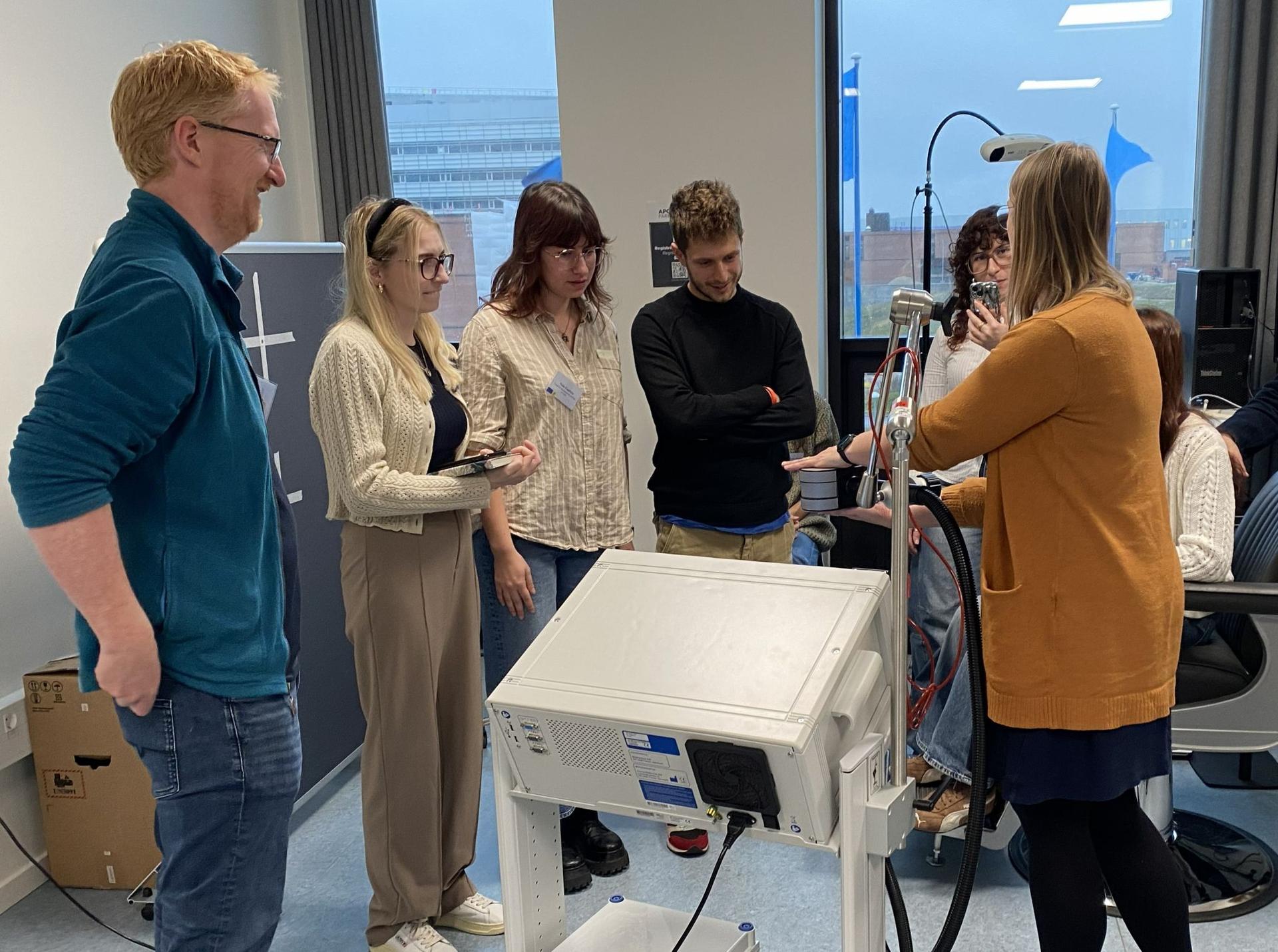
The participants took part in hands-on lab visits, gaining practical experience with advanced EEG and neurostimulation setups and discovering how these tools are applied in cutting-edge research.
Engaging workshops
The workshops at the FRESCO4NoPain training school gave participants a well-rounded set of practical and professional skills essential for conducting high-quality research. A core component of the program focused on responsible animal experiment design, where participants explored best practices, ethical considerations, and methodological principles that support rigorous and responsible scientific work.
The training also emphasized the value of interdisciplinary thinking. Through reflective group activities, participants examined how integrating perspectives from different fields can enhance creativity and strengthen approaches to complex questions in pain research.
In addition, a dedicated project management workshop equipped participants with tools to improve their organizational and leadership skills; competencies that are crucial for successfully planning, executing, and navigating research projects.
Together, these workshops provided a holistic training experience, combining methodological rigor, interdisciplinary insight, and practical skills to support the development of future pain researchers.